Still Dangerous

Good morning, Team! It’s Friday!

At some point, the narrative shifts.

You’re no longer the young executive on the rise. You’re the seasoned leader. The one with experience. Institutional knowledge. Scar tissue.

The risk? Experience can quietly turn into drift.

Staying relevant in your 60s isn’t about clinging to authority. It’s about remaining dangerous — physically, mentally, and strategically.

1. Strength is no longer optional.

Muscle loss accelerates after 50. Energy dips. Recovery slows. If you don’t train with intention, decline becomes the default. Strength training isn’t vanity — it’s durability. It sharpens focus, stabilizes mood, and signals discipline. Leaders who feel strong project strength.

2. Strategy beats stamina.

In your 40s, you could outwork people. In your 60s, you must out-think them. Pattern recognition becomes your edge. The question shifts from “How do we win this job?” to “Should we pursue it at all?” Mature leaders win by avoiding bad battles.

3. Energy is a leadership tool.

Teams mirror the executive. If you’re tired, reactive, or disengaged, it spreads. If you’re focused and steady, that spreads too. Energy management — sleep, nutrition, recovery — is no longer personal. It’s organizational.

4. Relevance requires humility.

Technology shifts. Markets change. Talent thinks differently. Staying dangerous means staying curious. Ask more questions. Invite dissent. Upgrade your thinking before it’s forced on you.

5. Play offense, not defense.

Too many experienced leaders protect legacy instead of building future value. The edge at 60 is clarity. You know what matters. You know what doesn’t. Use that to move faster, not slower.

Here’s the truth:

Aging is automatic. Decline is optional.

Your 60s can be consolidation — or acceleration.

•Stay strong enough to command the room.

•Stay sharp enough to see around corners.

•Stay humble enough to keep learning.

Have a blessed weekend!

Eric
Designing a Life?

Good morning, Team! It’s Friday!

Have you ever wondered what you should be doing with the rest of your life?

As I approach minimum retirement age, the goal line phases in and out of focus…frequently.

After picking one interesting looking article on my phone, my feed is now filled with retirement-based news articles. Complete overload! I’m still a long way off but I like to be well prepared for what’s coming next.

I now approach more information on the retirement topic with trepidation, so when Tony Robbins was interviewed recently, I didn’t realize initially that it was sponsored by a financial investment company. I paid most attention to the life advice from Tony as he established credibility and quickly articulated one of the most unsettling things I have heard in quite a while…

He posed the question, “Are you managing a living or are you designing a life?” 

He’s on YouTube if you want his take on the question. He and I view this topic in a similar light.

Making a living feels like it comes from a scarcity mindset. As in, “There’s only so much [x] so I need to figure out how to work within those available resources.”

Designing a life implies you start each day with endless possibilities, endless choices, an abundance mindset. What exciting, fulfilling and interesting things are you going to do today, this week, this year…and the rest of your life?

I love the perspective!

“I need to travel this week for work” compared to “I get to take a trip to Denver and I’ll visit a friend for lunch on the way in. I’ll spend quality time with coworkers, deliberately learn something new about many of them and in the evening, complete my workout in the hotel gym, pick a great place for a healthy meal and catch up on a book or maybe some sleep.”

It’s attitude in action instead of settling for what the world tends to throw at you. It’s better than “good enough”, it’s designing (the rest of) your life.

Have a blessed weekend!

Eric

It’s What You Signal

Good morning, Team! It’s Friday!

Every leader recognizes that culture matters. What most don’t seem to recognize is how to have a deliberate and positive impact on it each day. I’ve accepted leadership roles at different companies a number of times in my career. A fresh perspective and different experience have helped me to understand that culture is built through behavior—especially the small, repeated signals leaders send every day.

Patrick Lencioni reminds us that healthy organizations are rooted in trust. Without trust, teams waste energy on politics, self-protection, and ambiguity. Trust, however, does not emerge from authority or credentials. It emerges when leaders model vulnerability—admitting mistakes, asking for help, and putting the team’s success ahead of personal ego. When leaders go first, trust follows.

Stephen R. Covey extends this idea by reframing trust as both a character and a competence issue. Leaders build trust by aligning intent with behavior—doing what they say they will do, and doing it consistently. Covey’s principle of “begin with the end in mind” matters here: cultures drift when leaders react instead of lead with clarity. When expectations, priorities, and standards are explicit, people don’t guess—they execute.

Daniel Coyle takes these concepts further by showing how culture actually forms. In The Culture Code, Coyle demonstrates that high-performing cultures share three traits: psychological safety, shared purpose, and disciplined habits. What’s striking is that these traits are built through micro-moments—eye contact, listening, follow-through, and how leaders respond under pressure.

Culture is revealed most clearly when something goes wrong. Do leaders look for blame—or learning? Do they hoard information—or share it? Do they protect people—or positions? Teams quickly learn what truly matters, not by what leaders say in calm moments, but by what they do in tense ones.

The implication for leaders is simple—and demanding. You don’t “roll out” culture. You model it. Every meeting, every decision, every reaction is a vote for the culture you want—or the one you’ll get.

Culture is not soft. It is the operating system of execution. Build it deliberately, signal it consistently, and protect it relentlessly.

Have a blessed weekend!

Eric

Winning

Good morning, Team! It’s Friday!

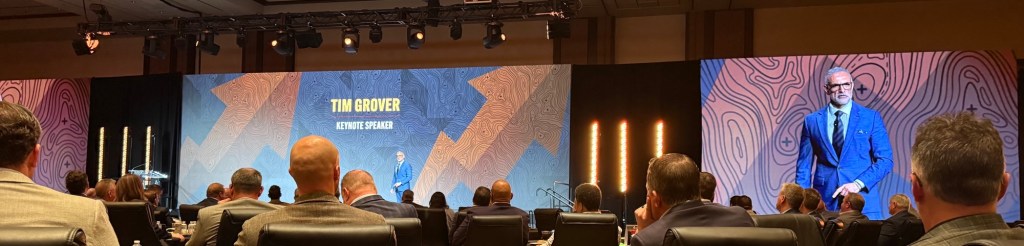
I had the distinct pleasure of attending a conference this week where I heard Tim Grover speak. He trained Michael Jordan and Kobe Bryant, two of the most elite athletes, ever.

I didn’t know of “Grove” before this week but when I saw him entering the conference area I knew he wasn’t a participant. Cut, lean, groomed…and intense, he’s not your typical motivational speaker. In fact, he doesn’t consider himself one. He just delivers the cold, hard truth.

He owned the stage. He’s mastered the effective use of pause and drilled home salient points about being elite, about being a leader and about being a winner.

•Talent is a gift, it’s not a promise

•Greatness requires imbalance 

•An attitude attributed to MJ: Give me the ball and get the f*ck outta the way

•If you think the price of winning is high…wait until you get the bill for regret!

•When you win, celebrate hard but don’t celebrate long 

If you could bottle the chemicals released after being inspired by this hard core, gravel-voiced, northeastern badass, you’d have the winning combination.

Have a blessed weekend!

Eric

Bend the Curve II-heredity

Good morning, Team! It’s Friday!

Ever heard?

“The apple doesn’t fall too far from the tree”

“Chip off the old block”

“Spitting image”

“Cast in the same mold”

“Cut from the same cloth”

If we do nothing to change the trajectory, we might end up just like our parents. 

“Like father, like son”

Is that ok? Preferred? Preventable?

I must admit, as I have aged, I looked in the mirror one day and thought to myself, “Dad?!”

Without surgery, we typically can’t do a lot to change the way we appear…but we don’t have to resolve to emulate our predecessors path or follow the same curve as it were.

•My father started college, but didn’t finish.

•He also started his own business, but struggled scaling it.

•He was a problem solver, but could have had much larger impact if he got out of his own way.

Each parent wants a better future for their children than their parents had. They are begging us to bend the curve, not just follow it.

What are you doing to chart your own course?

Here is “Invictus” by William Ernest Henley (1875):

Invictus

Out of the night that covers me,

Black as the pit from pole to pole,

I thank whatever gods may be

For my unconquerable soul.

In the fell clutch of circumstance

I have not winced nor cried aloud.

Under the bludgeonings of chance

My head is bloody, but unbowed.

Beyond this place of wrath and tears

Looms but the Horror of the shade,

And yet the menace of the years

Finds, and shall find, me unafraid.

It matters not how strait the gate,

How charged with punishments the scroll,

I am the master of my fate,

I am the captain of my soul.

It’s up to each of us to be the captain of our soul. Not to parrot or mimic or walk in the shadow of others, even a namesake.

Bend the heredity curve. Be yourself. Make your own mistakes but live the life you were meant to have. 

Have a blessed weekend!

Eric

Alignment vs. Agreement

Good morning, Team! It’s Friday!

Just came out of two days of Leadership meetings here in chilly, beautiful South Dakota. We had one of our corporate executives visit while we were together and he pointed out an issue I thought was worth expanding on today.

In leadership conversations, “alignment” and “agreement” are often used interchangeably. They shouldn’t be. Confusing the two slows decisions, dilutes accountability, and quietly erodes trust. High-performing organizations understand the difference—and intentionally choose alignment.

Agreement means consensus. It implies that everyone shares the same view, supports the same solution, and feels comfortable with the path forward. While agreement feels good, it is expensive. It takes time, encourages compromise over clarity, and often results in the lowest-common-denominator decision. Worse, agreement can silence dissent, as leaders avoid productive conflict in the name of harmony.

Alignment, on the other hand, does not require unanimity. It requires clarity and commitment.

Alignment occurs when leaders clearly understand the decision, the rationale behind it, and their role in executing it—whether or not it was their preferred option. Aligned leaders may disagree in the room, debate vigorously, and challenge assumptions. But once a decision is made, they commit fully and act consistently. There is no triangulating, second-guessing, or passive resistance.

The healthiest leadership teams embrace disagree and commit. They create space for robust discussion up front, then close ranks once direction is set. This builds speed without sacrificing quality and trust without requiring consensus.

Here’s the test:

Agreement asks, “Do you like this decision?” Alignment asks, “Will you own this decision?”

Organizations that demand agreement before acting often stall. Organizations that demand alignment move with purpose.

For leaders, the responsibility is twofold. First, ensure decisions are clear—what was decided, why it matters, and what success looks like. Second, hold leaders accountable not for their private opinions, but for their public commitment.

Alignment is not about suppressing voices; it’s about channeling them. It allows teams to benefit from diverse perspectives without being paralyzed by them.

In a volatile, high-stakes environment, alignment beats agreement every time. The goal isn’t comfort. The goal is coordinated action—and sustained results.

Have a blessed weekend!

Eric

Results

Good morning, Team! It’s Friday!

I had dinner last week with a friend and industry collaborator who charted a similar career path as mine. During conversation, Ron rattled off one the productivity adages, “Don’t confuse effort with results”.

I think this is a common problem. If someone works hard, they believe their efforts should be recognized and rewarded. However, without clarity of purpose and goals, it is entirely possible to expend large amounts of effort…doing the wrong thing, focusing on the wrong targets and following the wrong set of rules and guidelines, only to miss the mark and fall short.

How does this happen so often and how do successful people and companies get past this conundrum? In a word, clarity.

•clarity with people; getting the right people in the right seats… the who 

•clarity with purpose; what do we do, what do we not do and why do we do what we do

•clarity with process; how we do things. Systems should be aligned with efficient processes to minimize deviation between effort and results. An ideal process enables “plug and chug”. Bring in solid people, align them with company purpose, show them the rules and monitor progress toward required results. Adjust as required.

Easy to document, harder to do.

When performed well and results achieved, there is plenty of recognition and reward to go around.

The desired state … is predictability. Boring, predictable, glorious results.

Have a blessed weekend!

Eric

A glance from the grindstone

Good morning, Team! It’s Friday!

The holidays are over. People are back at it. 

I recognize I’m most content when I’m grinding… and my intense focus leaves most wondering why I am so angry. 🤨

The wrinkles in my forehead are there due to focus, not frustration. I can see what the project in my hands, rubbing up against the stone, will be … and I’m anxious and determined for it to realize its potential, and I’m nudging like a persistent parent (or maybe an armed guard).

I got home late last night and I’m back in the airport today under different conditions. Travel for other reasons provides the opportunity to look up from the project, the purpose, the focus … to see humanity, if but for a moment.

For example:

I normally don’t travel with checked bags and a kind attendant pulled me out of a long line to use touchless (since that was quicker) but my first thought was I was moving from a short line to a different, longer line. Grumbling to humbling; gratitude and apologies.

Still in “get ‘er done” mode, I’m waiting for the sky club to open. I get there early, a line forms, I approach the group waiting for the elevator and figure I’ll take the stairs only to find out all are being delayed to let the first wave of folks check in before the next wave goes up. More humility…

Life will continue to teach you lessons until you learn them.

Deep breath. Take a seat.

Observations:

Most people I see this morning are traveling in pairs.

-The Mom who tries to guide her 2 year old to the right row of seats picking up the trail of toys, etc.

-The dutiful wife escorting her somewhat absent-minded husband to his correct row and manage his backpack.

-The blind partner holding on to the backpack of her leading man.

We are all codependent to some extent.

Life will continue to teach you lessons as long as you are open to recognize them.

Have a blessed weekend and stay open to what life is trying to teach you. 

Eric

Neighborly

Good morning, Team! It’s Friday!

“Thank you for the butter and the prayers…”

We were out with family at an event Christmas Day when my phone alerted me someone had entered our condo. I got a little nervous but Anne was not available to speak to at the moment, so I waited, anxiously, for the right time to understand if she knew something I didn’t. I forgot about it until we got home.

We returned from the event and she clarified our neighbors across the hall had returned from a trip, didn’t have a critical cookie making ingredient so Anne gave the code to get in and directed them to the right spot in the fridge. When we got home, there were some chocolate chip cookies as a thank you with a note, some of it shared above.

Our neighbor across the hall is fighting cancer. Her husband posts on caring bridge, we follow, sometimes comment online and sometimes see them in passing, in the elevator or walking the dog. They are sweet people, going through a hard time, and doing it with the utmost grace and courage.

We are reminded daily of the hard things; challenges, pain, brokenness. How we react to the issues we must face is the essence. How we treat others as they face hard things  is the opportunity for civility, neighborly, humanity.

As you go out into the world today, this week and this new year of 2026, be gentle. Everyone is fighting a battle of some kind.

Eric

Bend the curve

Good morning, Team!  It’s Friday! …and my last blog for the year.

I’m sitting on yet another delayed flight over the past few weeks. Safety first, always. But it’s relative. I see logistics mistakes made every single day and the aviation industry is … not immune.

To my topic for the day.

There are natural patterns in life. An old boss called one out he named, the “bullshit tolerance” curve. It goes like this:

When we first get out of school/college, we are willing to make a name for ourselves and put in the time, effort, etc. As we age, we get married, buy a car, buy a house, have kids and with each step, we are so invested that we will tolerate…more bullshit. It escalates until the kids are out of college, the car is paid off (or you start leasing), the mortgage is done, or close, depending on how much the weddings cost and if you took a second mortgage out… and the descent begins. Usually just as treacherous as the ascent because now you’re whooped, older and wisdom may or may not make up for your inflexibility. (Is this guy sarcastic or just excessively candid?)

Bending:

In this instance, we try to bend the curve DOWN, flatten the mountain as it were, so recovery isn’t quite so long, arduous and painful…labor of love or not.

We’ve all seen the thought process that “I’m in so deep now, what’s another $50k?”

Answer: It might be your sanity, your health, or your willingness to keep going.

This is too important to stop at one example so this might spill over into the New Year. We should explore moving some curves to the right, some to the left and some up instead of flattening.

No matter what, if you give in to the pattern, you’ve accepted mediocrity as the only answer. This is a leadership blog at its core and average, typical, take-what-the-world-gives-you is like giving up. Something I can’t accept, nor should you.

Have a blessed weekend, happy holidays and an awesome new year! 

BTW-If you are thinking about making a resolution…consider a commitment not tied to a calendar but linked to the benefits that will come from your choice of healthier habits. 🙂

Eric